
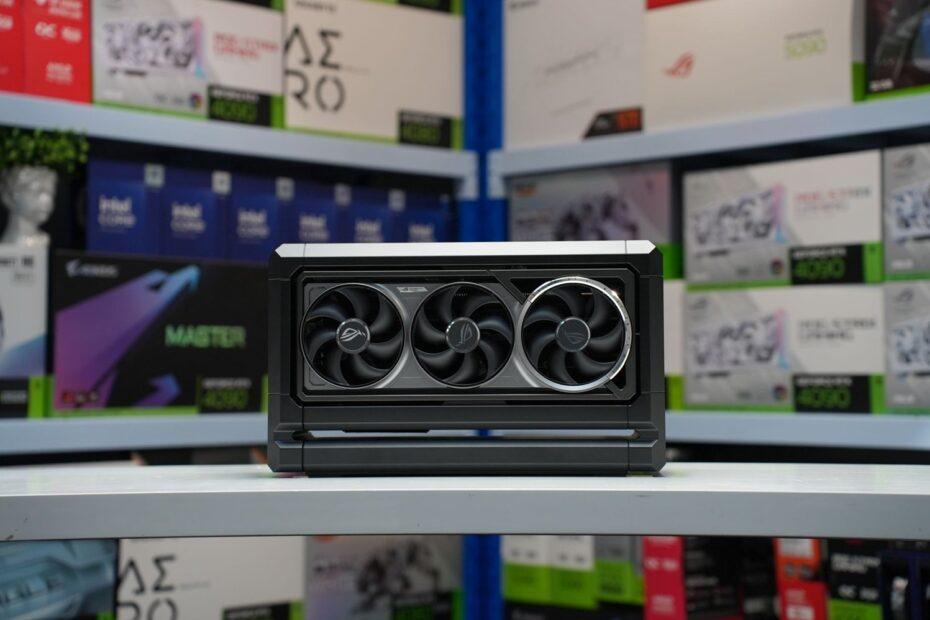
The journey of the computer graphics card is a compelling narrative of technological advancement, mirroring the broader evolution of personal computing. Initially conceived as mere conduits for visual output, these components have grown into specialized, powerful processors, fundamentally altering how we interact with digital content, especially in the realm of gaming and visual computation.
The Dawn of Visual Output: Early Display Adapters
In the early days of personal computing, the concept of a dedicated graphics card as we know it today was nascent. Systems relied on basic display adapters to translate digital data into signals that a monitor could interpret. These early adapters, such as the IBM Monochrome Display Adapter (MDA) and Color Graphics Adapter (CGA), were primarily designed for text-based interfaces and rudimentary graphics. The MDA, for instance, offered sharp monochrome text but no graphical capabilities, while the CGA introduced basic color and limited graphical resolution, often with a distinctive, garish palette. Later advancements like the Enhanced Graphics Adapter (EGA) and Video Graphics Array (VGA) began to offer more colors and higher resolutions, laying the groundwork for more visually rich experiences, though still far from what modern users expect.
Companies like Orchid Technology emerged during this period, contributing to the burgeoning market for display hardware. The Orchid Graphics Adapter, released in 1982, was an example of the entry-level graphics boards available for IBM PC compatibles, aiming to provide enhanced display capabilities beyond the standard offerings.
The Rise of Dedicated Graphics Processors (GPUs)
The true revolution in graphics processing began with the realization that rendering complex images and animations required significant computational power. This led to the development of dedicated Graphics Processing Units (GPUs) and the graphics cards that house them. Unlike early adapters that simply managed pixel output, GPUs were designed from the ground up to handle parallel processing tasks essential for 3D rendering. This shift marked a departure from basic display management to active scene generation.
The advent of 3D graphics in video games was a primary catalyst for this evolution. Early 3D games, while primitive by today's standards, demanded more than CPUs could efficiently provide. Dedicated graphics cards, equipped with specialized chips and their own memory (VRAM), could offload these demanding tasks from the main processor. This allowed for smoother frame rates, more detailed environments, and the introduction of complex visual effects that were previously impossible.
Graphics Cards as Gaming Powerhouses
As the demand for realistic and immersive gaming experiences grew, so did the sophistication of graphics cards. The late 1990s and early 2000s saw an arms race in GPU development, with companies like NVIDIA and ATI (later acquired by AMD) pushing the boundaries of performance. Features like hardware-accelerated 3D rendering, texture mapping, and anti-aliasing became standard. The introduction of programmable shaders allowed developers to create incredibly detailed lighting, shadows, and material effects, transforming virtual worlds into visually stunning landscapes.
Modern graphics cards are not just about raw power; they are complex systems featuring multi-core GPUs, vast amounts of high-speed VRAM, and advanced cooling solutions. Technologies like real-time ray tracing, introduced in recent years, simulate the physical behavior of light, offering unprecedented realism in reflections, refractions, and global illumination. These advancements have made PC gaming a visually spectacular medium, often setting the benchmark for graphical fidelity across all platforms.
Beyond Gaming: Professional and Computational Applications
While gaming has been a major driver, the evolution of graphics cards has also profoundly impacted professional fields. The parallel processing capabilities of GPUs are exceptionally well-suited for tasks beyond rendering. In fields like computer-aided design (CAD), video editing, and animation, powerful graphics cards enable faster rendering, smoother playback, and more responsive manipulation of complex digital assets. Scientific research, particularly in areas like computational fluid dynamics, molecular modeling, and climate simulation, has also benefited immensely from GPU acceleration.
Furthermore, the rise of artificial intelligence and machine learning has cemented the GPU's role as a critical component in modern computing. Training deep neural networks requires massive parallel computations, making GPUs indispensable for AI development. This has led to the creation of specialized GPUs optimized for AI workloads, further broadening the scope of these powerful processors.
The Future of Graphics Cards
The trajectory of graphics cards suggests a future where they become even more integrated into various aspects of computing. We can anticipate continued advancements in real-time rendering, with AI playing an increasingly significant role in optimizing graphics quality and performance. Cloud gaming services, which stream games from powerful remote servers, also rely on cutting-edge GPU technology. As display technologies evolve with higher resolutions and refresh rates, the demands on graphics cards will only intensify. The ongoing innovation in GPU architecture promises to deliver greater efficiency, enhanced capabilities, and new possibilities for visual computing and beyond.