
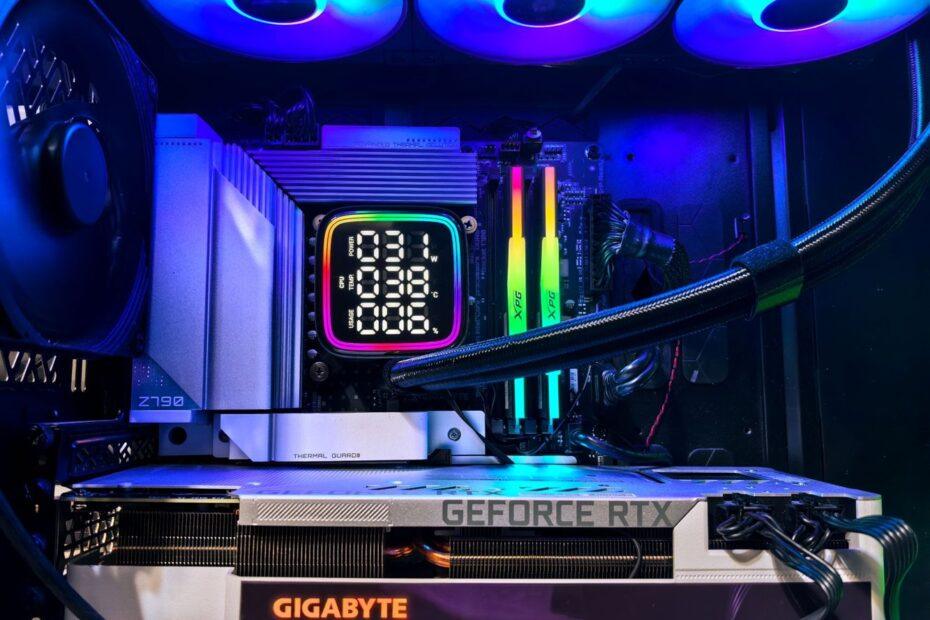
Random Access Memory (RAM) is a fundamental component of any computing device, acting as the system's short-term memory. Its speed and capacity directly impact how quickly a computer can access and process data, influencing overall system performance, multitasking capabilities, and the responsiveness of applications. Among the most prevalent types of RAM is DDR SDRAM, which has undergone several evolutionary stages, each bringing notable improvements.
The Evolution of DDR SDRAM
DDR SDRAM, standing for Double Data Rate Synchronous Dynamic Random-Access Memory, revolutionized memory technology by enabling data transfer on both the rising and falling edges of the clock signal, effectively doubling the data rate compared to its predecessor, SDR SDRAM. This fundamental innovation paved the way for subsequent generations, each building upon the last with enhancements in speed, efficiency, and capacity.
DDR1: The Genesis
The first generation, DDR1, introduced in 2000, marked a significant leap forward. It operated at clock speeds ranging from 100 MHz to 200 MHz, translating to effective data transfer rates of 200 MT/s (MegaTransfers per second) to 400 MT/s. While these speeds seem modest by today's standards, DDR1 provided a substantial performance uplift over SDR RAM, making it a cornerstone of PC builds for several years. Its voltage requirement was typically 2.5V or 2.6V.
DDR2: Increased Bandwidth and Efficiency
Launched in 2003, DDR2 SDRAM aimed to increase memory bandwidth and reduce power consumption. It achieved higher transfer rates by using a higher bus frequency and a prefetch buffer of 4 bits, compared to DDR1's 2 bits. DDR2 modules typically operated at speeds from 400 MT/s to 1066 MT/s. A key improvement was its lower operating voltage, generally 1.8V, which contributed to better power efficiency. The physical design also changed, making DDR1 and DDR2 modules incompatible.
DDR3: Further Speed and Power Gains
DDR3 SDRAM, released in 2007, continued the trend of increased speeds and reduced power consumption. It featured an 8-bit prefetch buffer and operated at higher clock frequencies, resulting in transfer rates ranging from 800 MT/s to 2133 MT/s. The operating voltage was further reduced to 1.5V, with lower-voltage variants (DDR3L) at 1.35V becoming common, enhancing energy efficiency, especially in mobile devices and laptops. DDR3 modules are physically distinct from DDR2, preventing accidental installation.
DDR4: Higher Frequencies and Densities
Introduced in 2014, DDR4 SDRAM brought significant advancements in speed, density, and power efficiency. It operates at higher frequencies, typically starting from 2133 MT/s and extending well beyond 4800 MT/s. DDR4 utilizes an 8-bit prefetch buffer but employs a more advanced internal architecture and signaling methods to achieve its higher performance. The standard operating voltage for DDR4 is 1.2V, making it more energy-efficient than DDR3. DDR4 modules are also physically different, featuring a notched design that ensures correct installation and prevents cross-compatibility with older slots.
DDR5: The Latest Generation
The most recent iteration, DDR5 SDRAM, launched in late 2020, represents another substantial leap in performance and efficiency. DDR5 modules offer much higher bandwidth, with initial speeds starting at 4800 MT/s and projections for speeds exceeding 8400 MT/s. Key architectural changes include dual 32-bit channels per module (instead of a single 64-bit channel in previous generations), leading to improved memory access efficiency. DDR5 also features improved power management with an on-module Power Management Integrated Circuit (PMIC) and operates at a standard voltage of 1.1V, further enhancing energy savings. Like its predecessors, DDR5 has a unique physical connector, ensuring compatibility only with DDR5-specific motherboards.
Performance Benefits Across Generations
The primary performance benefit derived from upgrading through DDR generations is increased memory bandwidth. Higher bandwidth allows the CPU to access data more rapidly, which is crucial for demanding tasks such as gaming, video editing, scientific simulations, and running complex software. Each generation also typically offers improved power efficiency, leading to lower energy consumption and heat generation, which can be particularly beneficial for laptops and high-density server environments. Furthermore, newer generations often support higher memory densities, allowing for larger RAM capacities within a system, enabling better multitasking and handling of larger datasets.
Choosing the Right DDR RAM
When building or upgrading a PC, selecting the correct DDR RAM generation is paramount. Motherboards are designed to support specific DDR generations (DDR4 or DDR5, for example), and the physical slots are keyed to prevent incorrect installation. The performance benefits of a new DDR generation are only realized when paired with a compatible CPU and motherboard that can leverage its capabilities. For most modern systems, DDR4 or DDR5 are the primary considerations, with DDR5 offering the latest in speed and efficiency for cutting-edge performance.