
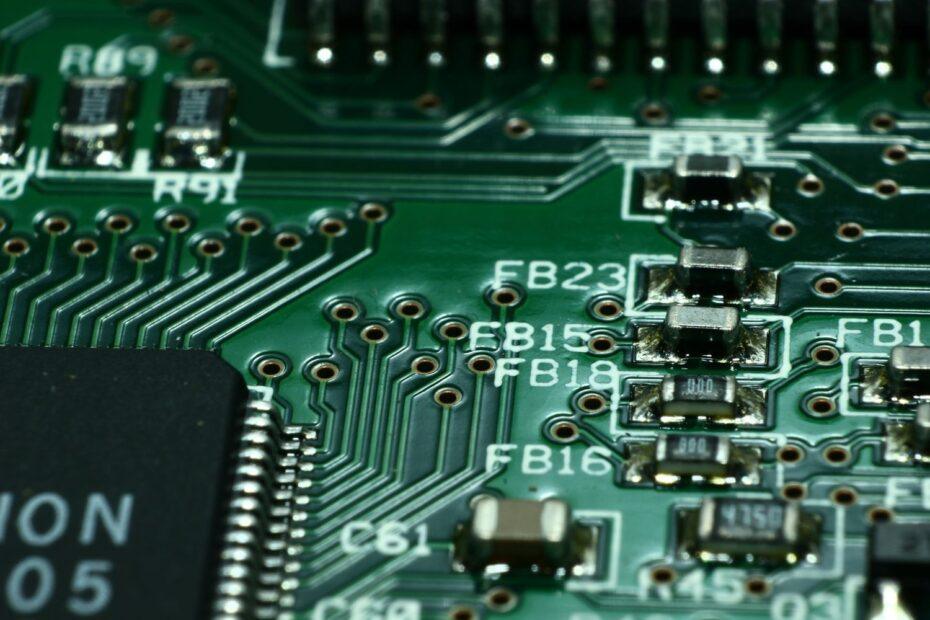
The Central Processing Unit (CPU) is often referred to as the brain of a computer. It is the primary component responsible for executing instructions and performing calculations that power all software and operations. While CPUs have evolved dramatically, understanding their core specifications is key to appreciating their capabilities. Three fundamental metrics that define a CPU's performance are its core count, clock speed, and cache memory.
Understanding Core Count
A CPU core is essentially an individual processing unit within the larger CPU. Think of it like having multiple workers on a single chip, each capable of handling tasks independently. A single-core CPU can only process one instruction at a time, whereas a multi-core CPU can manage multiple threads of instructions concurrently. The number of cores has a significant impact on a computer's ability to multitask and handle demanding applications. For instance, when running several programs simultaneously, such as browsing the web, streaming music, and editing a document, a CPU with more cores can distribute these tasks more efficiently, leading to a smoother and more responsive user experience. Modern CPUs often feature dual-core, quad-core, hexa-core, octa-core, and even higher configurations, catering to a wide range of computing needs from basic productivity to intensive gaming and professional content creation.
The Role of Clock Speed
Clock speed, measured in gigahertz (GHz), dictates how many cycles a CPU can execute per second. Each cycle represents a fundamental operation the CPU performs. A higher clock speed means the CPU can process instructions more quickly, assuming other factors remain constant. For tasks that are not heavily multithreaded, such as older software or certain single-threaded applications, clock speed can be a more dominant factor in performance. However, it's important to note that clock speed is not the sole determinant of performance. A CPU with a lower clock speed but more efficient architecture or more cores might outperform a CPU with a higher clock speed but fewer cores or a less optimized design. Manufacturers often use technologies like Turbo Boost (Intel) or Precision Boost (AMD) to dynamically increase clock speeds for specific cores when the workload demands it, providing bursts of extra performance.
Cache Memory: The CPU's High-Speed Buffer
CPU cache is a small amount of very fast memory located directly on the CPU chip. Its primary purpose is to store frequently accessed data and instructions, reducing the need for the CPU to fetch them from slower main memory (RAM). This significantly speeds up processing because accessing data from cache is orders of magnitude faster than accessing it from RAM. CPU caches are typically organized into levels, with L1 cache being the smallest and fastest, followed by L2, and then L3 cache, which is larger but slightly slower than L1 and L2. L1 cache is usually split into instruction and data caches for each core. L2 cache is generally dedicated to individual cores, while L3 cache is shared among all cores on the CPU. A larger and more efficient cache memory system allows the CPU to keep more relevant data readily available, which can lead to substantial performance improvements, especially in data-intensive tasks and complex applications.
Interplay and Future Trends
The performance of a Central Processing Unit is a complex interplay of its core count, clock speed, and cache memory, alongside other factors like architecture and manufacturing process. While core count excels at multitasking and parallel processing, clock speed is crucial for raw instruction execution speed. Cache memory acts as a vital intermediary, ensuring that the CPU has quick access to the data it needs most. As computing evolves, processors are becoming more sophisticated, integrating specialized cores for AI tasks, improving power efficiency, and further optimizing the balance between these core specifications to meet the demands of future technologies and applications.