
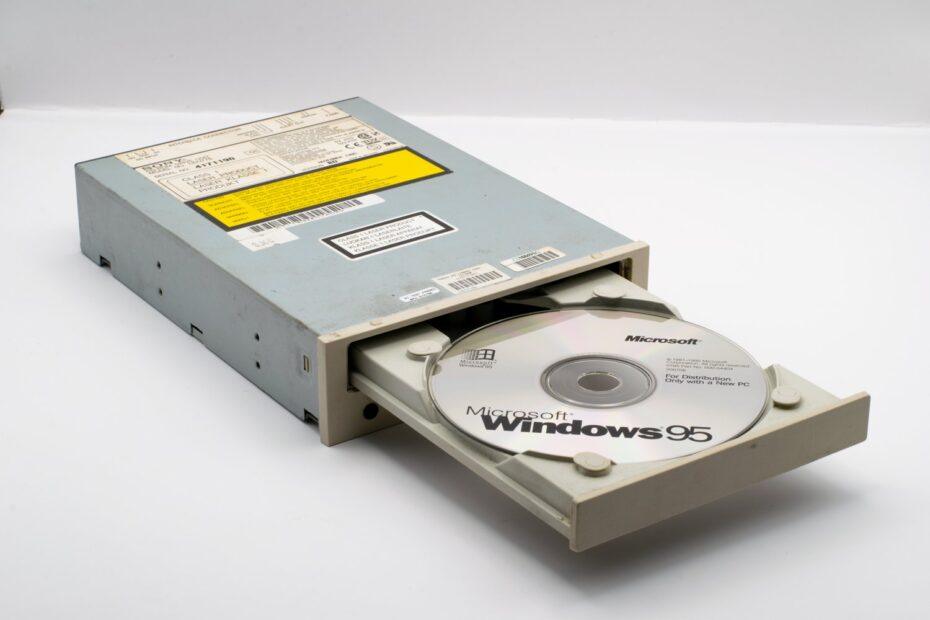
Optical drives have served as a cornerstone of personal computing for decades, fundamentally changing how software was distributed, data was stored, and media was consumed. Their journey from humble beginnings to high-definition capabilities reflects the broader advancements in digital technology. Understanding The Evolution of Optical Drives offers a glimpse into the changing needs and capabilities of computer systems over time.
The Dawn of the CD-ROM Era
The Compact Disc Read-Only Memory (CD-ROM) drive emerged in the late 1980s and rapidly gained prominence throughout the 1990s. Prior to CD-ROMs, software was often distributed on floppy disks, which had very limited storage capacity. The CD-ROM, with its capacity of around 650 MB, represented a massive leap forward, enabling the distribution of much larger applications, operating systems, and multimedia content like encyclopedias and games. Companies like Oak Technology were instrumental in this period, supplying semiconductors for CD-ROM drives and other optical storage devices, capitalizing on the booming market driven by rapid increases in drive speeds during the mid-1990s.
The increasing adoption of CD-ROM technology spurred innovation in drive speeds, moving from single-speed (1x) to 2x, 4x, and beyond, significantly reducing loading times for applications and games. This era marked the beginning of a standardized, high-capacity removable media format that became a staple in virtually every personal computer.
The DVD Revolution: More Capacity, Better Media
By the late 1990s, the demand for even greater storage capacity led to the development and widespread adoption of the Digital Versatile Disc (DVD). A single-layer DVD could hold approximately 4.7 GB of data, nearly seven times the capacity of a standard CD-ROM. This substantial increase made DVDs the ideal medium for distributing full-length feature films, larger software suites, and extensive game installations. The transition to DVD also involved new drive technologies and improved error correction, ensuring reliable playback and data integrity.
The DVD format also introduced recordable (DVD-R, DVD+R) and rewritable (DVD-RW, DVD+RW) options, allowing consumers to back up data, create their own movie discs, and archive important files with unprecedented ease. This versatility cemented the DVD drive's place as an essential component in PCs for many years.
Blu-ray's High-Definition Push
As video resolutions increased with the advent of High Definition (HD) television, the storage capacity of DVDs proved insufficient for uncompressed HD content. This led to the development of the Blu-ray Disc (BD) format in the early 2000s. Blu-ray uses a blue-violet laser, which has a shorter wavelength than the red laser used by CD and DVD drives, allowing data to be stored at higher densities. A standard single-layer Blu-ray disc can hold 25 GB of data, while dual-layer discs offer 50 GB, and even higher capacities have been developed for archival purposes.
Blu-ray drives became the standard for distributing HD movies and were also adopted for PC gaming, particularly for titles that required extensive installation data. The format's superior capacity and data transfer rates made it the pinnacle of optical storage technology for consumer electronics and computing.
The Declining Role and Niche Future
Despite their significant contributions, optical drives have seen a considerable decline in mainstream computing in recent years. The rise of high-speed USB flash drives, external hard drives, and Solid State Drives (SSDs) offering massive capacities has made removable physical media less necessary for general data transfer and storage. Furthermore, the proliferation of high-speed internet has enabled seamless digital downloads for software, games, and media through online stores and streaming services, largely bypassing the need for optical discs.
Many modern laptops and even some desktop PCs no longer include built-in optical drives to save space and reduce costs. However, optical drives continue to hold relevance in specific niches. They remain valuable for users who require high-capacity, long-term data archiving, for professionals working with specific media formats, or for enthusiasts who prefer physical media for their collections. The enduring legacy of optical drives is a testament to their impact on the digital age.