
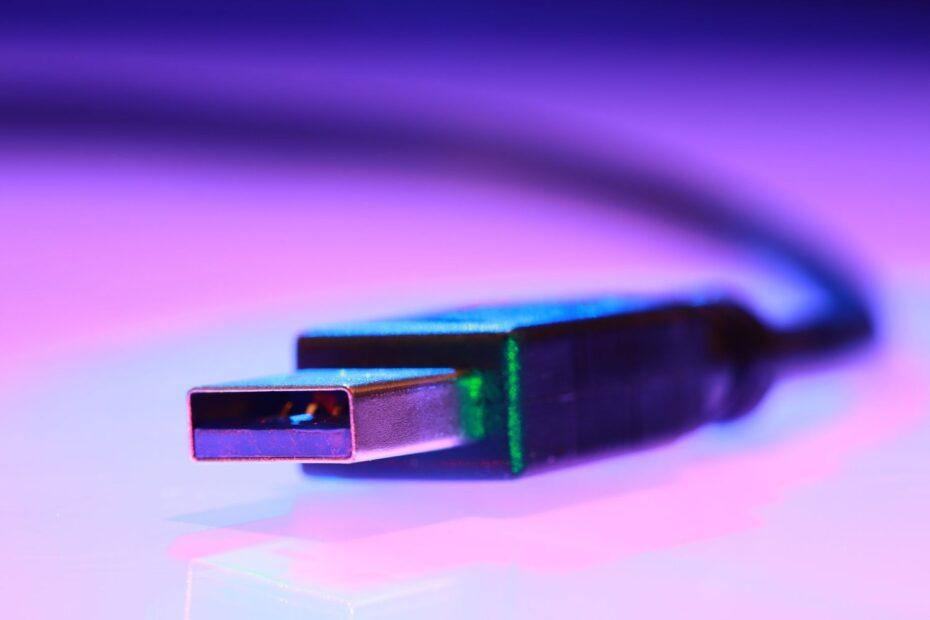
The Ubiquitous Universal Serial Bus
The Universal Serial Bus, commonly known as USB, has fundamentally reshaped how we connect devices to computers and each other. What began as a solution to simplify peripheral connections has evolved into a sophisticated standard supporting everything from simple keyboards to high-definition displays and rapid storage. Understanding the journey of USB ports reveals a remarkable progression in data transfer capabilities and versatility.
The Dawn of USB: Simplicity and Slow Speeds
The first USB specification, USB 1.0, was released in 1996. Its primary goal was to standardize the connection of peripherals like keyboards, mice, and printers, replacing a multitude of proprietary and often complex interfaces. USB 1.0 offered two data transfer rates: Low Speed at 1.5 Mbit/s and Full Speed at 12 Mbit/s. While a significant improvement in ease of use, these speeds were modest by today's standards, adequate for input devices but limiting for storage or multimedia.
USB 1.1, released in 1998, refined the standard, addressing some early implementation issues and improving compatibility. It maintained the same speed limitations but became the de facto standard, cementing USB's place as the go-to connection for a wide range of computer peripherals.
USB 2.0: The 'High-Speed' Revolution
A major leap forward occurred in April 2000 with the release of USB 2.0. This specification introduced a new, significantly faster transfer rate: High Speed, operating at 480 Mbit/s. This was a twelve-fold increase over USB 1.1's Full Speed, dramatically enhancing the performance of external hard drives, flash drives, and other storage devices. The introduction of the Hi-Speed USB logo signified this advancement. Beyond speed, USB 2.0 also laid the groundwork for important supplements, including specifications for Mini-A and Mini-B connectors, Micro-USB connectors, and the crucial USB On-The-Go (OTG) supplement, which allowed devices like smartphones to act as hosts, enabling direct communication between two USB devices without a computer.
The Battery Charging Specification further evolved with USB 2.0, allowing for increased current on charging ports, which meant devices could charge faster, even while potentially maintaining some level of data communication. This made USB ports not just data conduits but also practical power sources.
Pushing the Boundaries: USB 3.0 and Beyond
The evolution continued with USB 3.0, introduced in 2009. This standard, often marketed as SuperSpeed USB, offered a theoretical maximum signaling rate of 5 Gbit/s, approximately ten times faster than USB 2.0. New physical connectors, often distinguished by blue plastic, were introduced to accommodate the increased bandwidth. USB 3.0 also improved power efficiency and introduced bidirectional data transfer, meaning data could be sent and received simultaneously at full speed.
Subsequent revisions, such as USB 3.1 (which introduced SuperSpeed+ at 10 Gbit/s) and USB 3.2 (doubling speeds again to 20 Gbit/s), built upon this foundation. These iterations primarily focused on increasing raw data throughput, making large file transfers quicker and supporting more demanding applications.
The Modern Era: USB-C and Thunderbolt Integration
Perhaps the most significant recent development is the USB Type-C (USB-C) connector. Introduced with USB 3.1, USB-C is a reversible connector, meaning it can be plugged in either way up, significantly improving user convenience. More importantly, USB-C is a versatile standard that can carry data, power, and even video signals. It has become the backbone for newer, faster USB specifications and has also been adopted by other high-speed interface standards like Thunderbolt.
The integration with Thunderbolt, particularly Thunderbolt 3 and Thunderbolt 4, has further blurred the lines. Thunderbolt, originally a separate Intel technology, now uses the USB-C connector and offers speeds up to 40 Gbit/s, capable of driving multiple high-resolution displays, external GPUs, and ultra-fast storage arrays. This convergence signifies USB ports moving beyond simple data transfer to become a universal, high-performance connection standard.
Conclusion: A Continuous Evolution
From the humble beginnings of USB 1.0, designed for basic peripherals, to the versatile and high-speed capabilities of USB-C and Thunderbolt, the evolution of USB ports has been a story of continuous innovation. Each generation has brought increased speed, improved functionality, and greater convenience, solidifying USB's role as an indispensable technology in our connected world. The journey of USB ports continues, promising even faster speeds and more integrated functionality in the future.
Related reading
- Solid State Drives vs. Hard Disk Drives: Deciphering Storage Speed and Capacity Needs
- Demystifying NVMe Technology: The Latest Frontier in High-Speed Storage Solutions
- The Science Behind SSD Wear Leveling and Data Longevity